Cocoa Packet Analyzer Alternatives For Mac
I've become very comfy in the world of pointer-frée, garbage-collected programming languages. Now I have got to compose a little Mac element.
I've been recently studying 0bjective-C, but as l deal with the likelihood of holding ideas and the want to take care of retain counts, I sense disheartened. I understand that Objective-C today has trash selection but this just works with Leopard. My component must work with Gambling, as well. I require to access some Cocoa your local library not available to Coffee, therefore that rules out my usual tool of choice.
What are usually my alternatives? Especially with no precise tips and automatic garbage collection. What do you imply by 'component?' Do you indicate a bit of program code or a collection you are going to hands to additional individuals to web page link into their apps?
If therefore then it is certainly not reasonable to make use of any of the bridged languages at this time. While a great deal of the bridges are very good, they almost always have problems and problems that most app developers will not really be prepared to offer with to use a single component, especially if it involves bringing in a significant runtime. The bridges are most beneficial to bridge other language your local library into your Intent D app. While you can compose fairly comprehensive apps using them, carrying out so frequently requires a much better understanding of Purposeful C than just writing an Purposeful C application, since you require to understand and manage with the language, object design, threading, and storage allocation impedance mismatches thát occur.
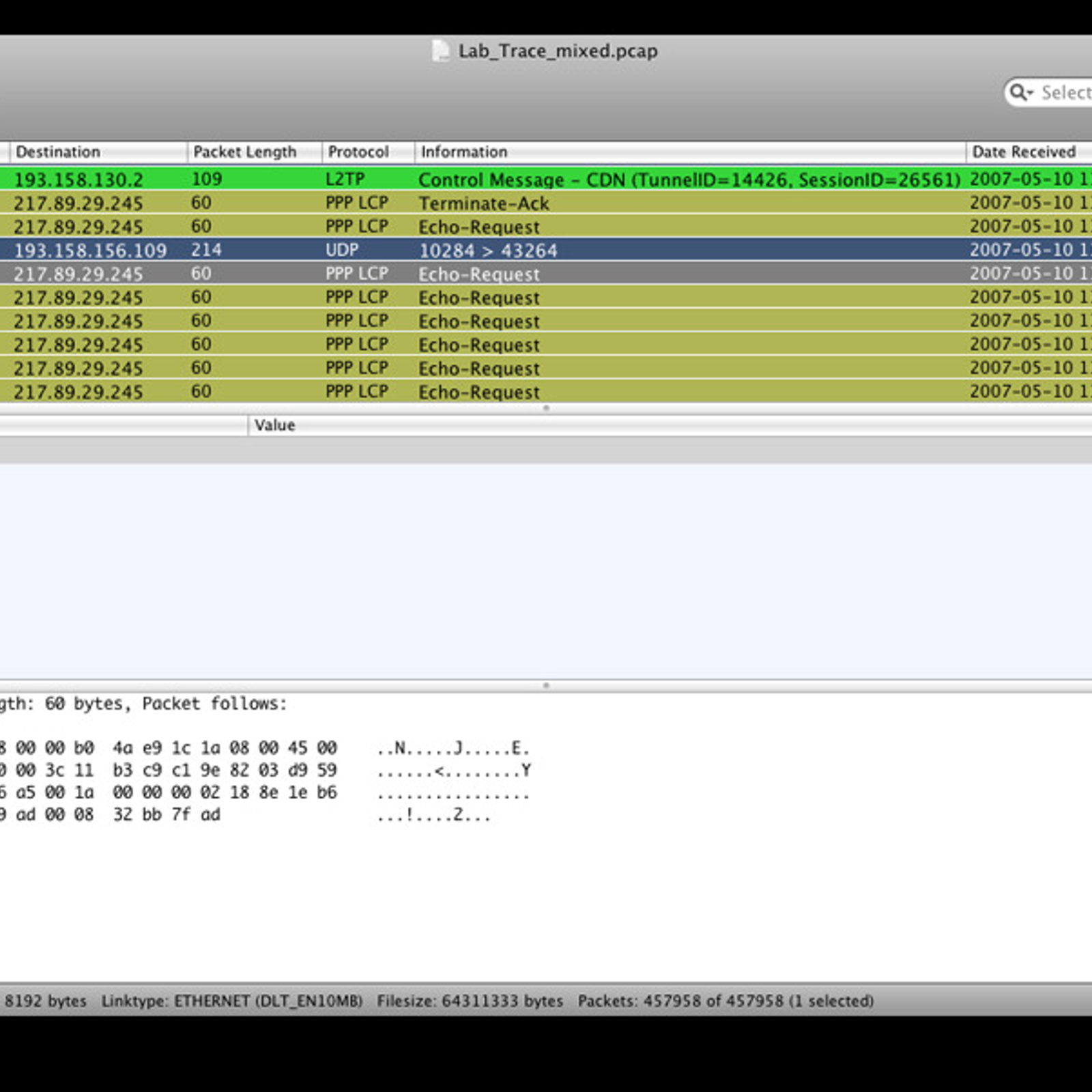
Hi EE folks i am looking for a reliable, malware/adware-free network sniffer for Mac OS X, better free and open source. Do you have some suggestions please? Alternatives to Cocoa Packet Analyzer for Windows, Mac, Linux, BSD, iPhone and more. Filter by license to discover only free or Open Source alternatives. This list contains a total of 11 apps similar to Cocoa Packet Analyzer.
This is certainly also why several people argue that even if you are usually quite acquainted with a vocabulary, trying to understand Cocoa using that vocabulary through a bridge is generally more hard that understanding it using Objective M. Finally, very much of the latest assistance for bridged languages was owing to 'BridgeSupport,' a function was added in Leopard. Even bridges that predate that have been migrating towards, occasionally in like a way that using the bridged language on Gambling and Leopard can possess substantial differences. Also, there is usually presently no bridge assistance for iPhone, and most bridged languages will not really work on it, if that is usually an problem.
Eventually, if you are usually composing a collection that is usually going to be connected into various other apps, you need to operate on Gambling and Leopard, and you need to access Cocoa just APIs I think you will discover making use of any non-Objective Chemical solution quite tough. You shouldn't end up being intimidated by Cocoa'h maintain/release research counting. It'h much, very much less difficult in practice than GC followers would have you think.
The are dead basic, they only have an effect on a small amount of your program code, and also that code can be produced automagically. Here's the technique. You encapsulate your MM program code in accessor methods, and generally make use of accessors.
Packet Analyzer Download
Xcode provides built-in scripts to generate the suitable accessors, or if you need more versatility there are 3rd-part apps like. This isn'testosterone levels an invasive approach - you just require to get worried about retaining an object if you're going to require to maintain it for later make use of, and if you're going to do that you'll need an example variable in which to maintain it in any case. And, if you're also using KVO ánd bindings, you'Il want to use accessors to create certain the suitable observer notices are fired. Basically, if you're also using good OOP and Cocoa procedures, there's i9000 practically no extra thought or effort involved with memory space management. Many folks who have got difficulty with Cocoa'beds 'regular' memory management are usually doing therefore as a result of misusing it.
The almost all common mistake will be to scatter the relevant code all over the place. That means that a lacking retain, additional release, etc will be hard to discover.